

Same Pathogen, Different Outcome: What Soil Biology Revealed in a Spanish Vineyard
Black foot disease was detected at comparable levels across a vineyard in Spain. Yet symptoms were concentrated in the northern sections, while the south remained symptom-free.
BeCrop® Technology helped look beyond pathogen presence to reveal an important biological difference between the two areas.
Share this
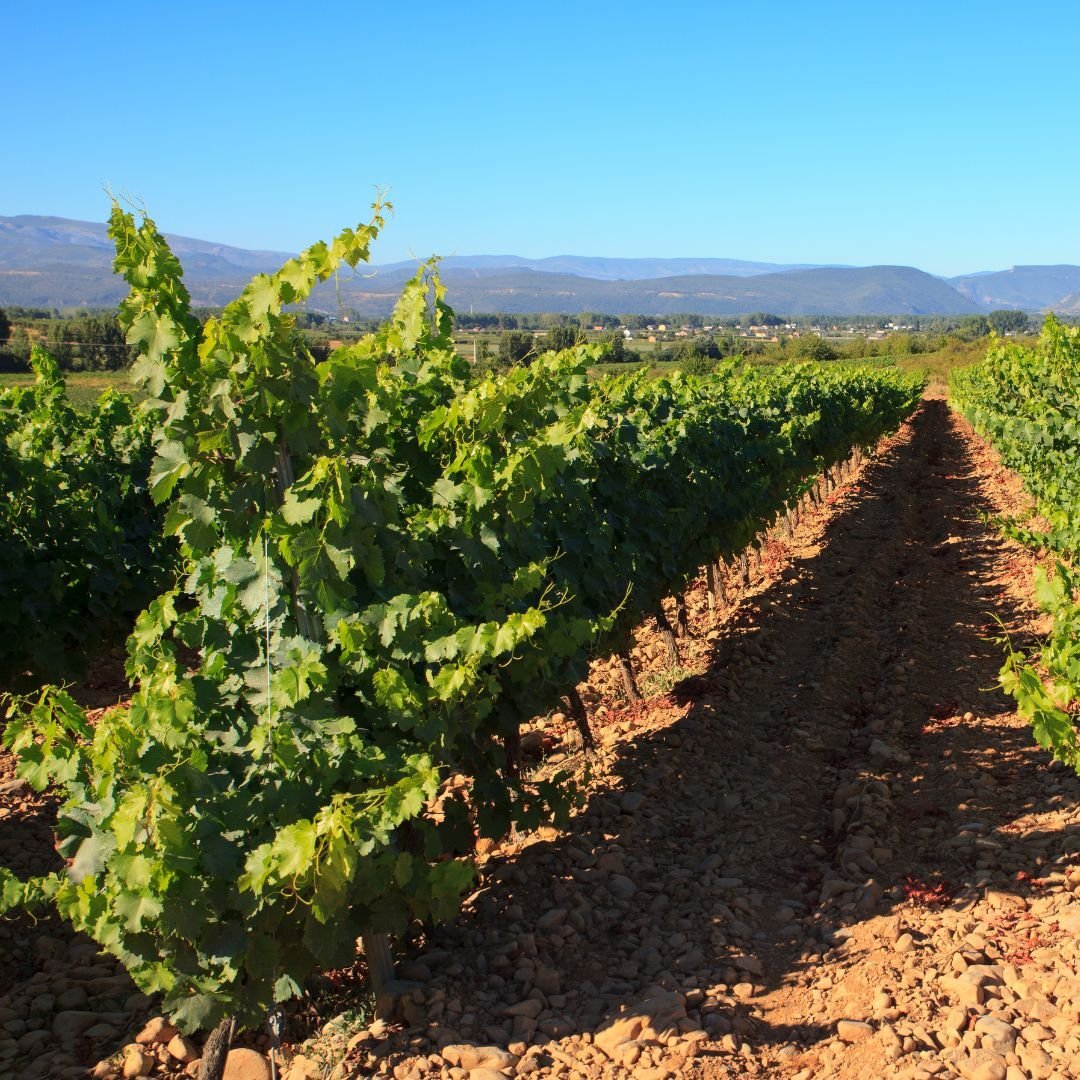
Comparable
North vs. South
Higher Trichoderma
The broader microbiome added context to the disease pattern.
Black foot disease was detected at comparable levels throughout a vineyard in Spain. Yet the pattern aboveground was very different.
Symptoms were concentrated in the northern sections of the vineyard, while no symptoms were observed in the south. Plant material analysis also showed a difference: in the north, the black foot pathogen was highly abundant inside the plants, while the same pattern was not observed in the south.
The contrast raised an important question: If pathogen presence was comparable across the vineyard, what else could help explain the different outcomes?
Same pathogen pressure. Different symptoms.
Black foot disease was detected at comparable levels across the vineyard, yet symptoms were concentrated in the northern sections while the south remained symptom-free.
The question was no longer simply whether the pathogen was present, but what could help explain the different outcomes across the vineyard.
Look beyond the pathogen.
BeCrop® Technology provided a broader view of the microbial communities surrounding the pathogen, allowing the symptomatic and symptom-free areas of the vineyard to be compared biologically.
Plant material was also sequenced to add another layer of information about what was happening inside the vines.
Examine black foot disease levels across the vineyard.
Look at the broader microbial communities in symptomatic and symptom-free areas.
Sequence plant material to see whether the pathogen showed the same pattern inside the vines.
The broader biology revealed a key difference.
Trichoderma stood out in the symptom-free south.
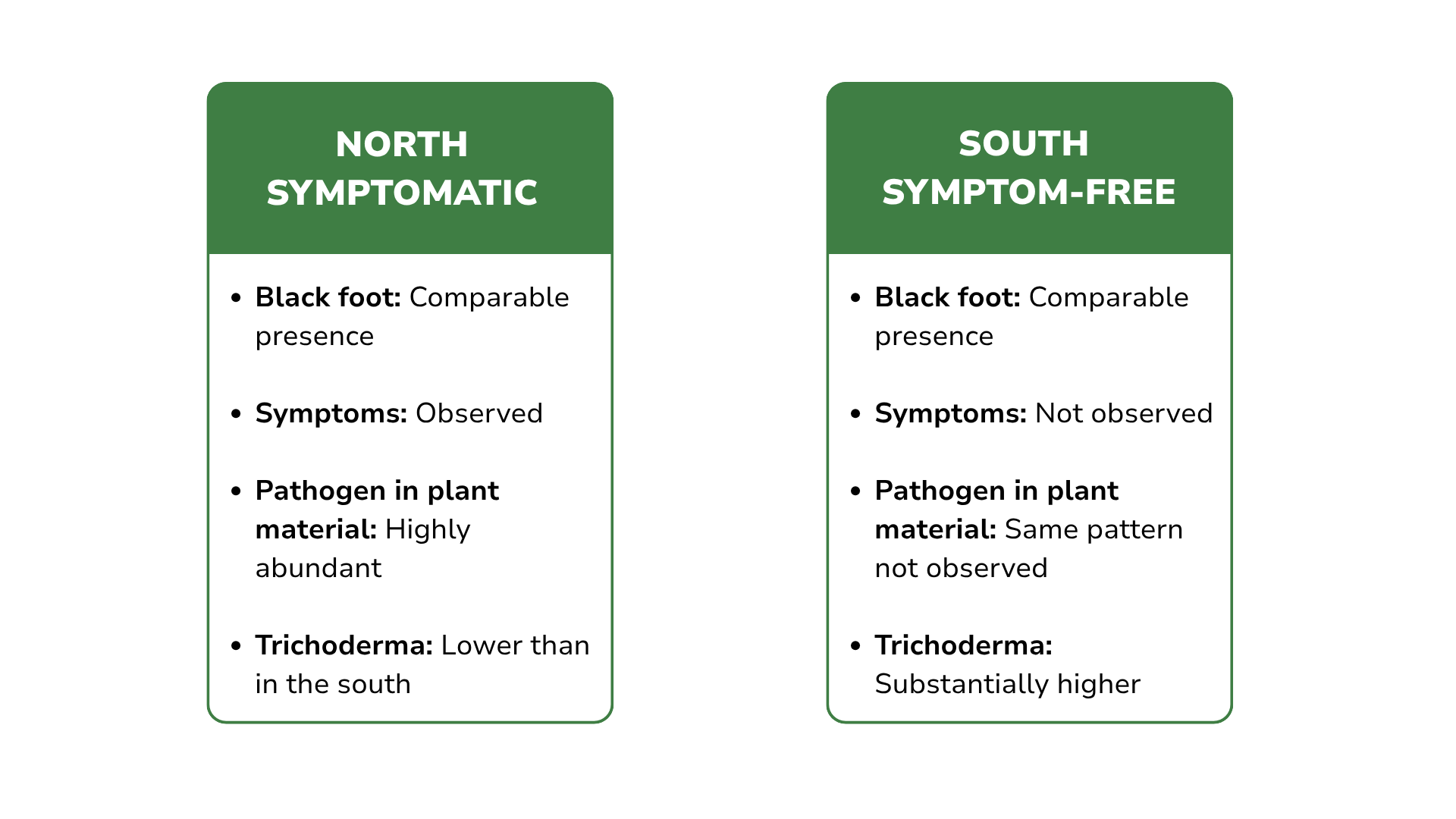
While black foot disease was detected at comparable levels across the vineyard, the surrounding biology differed.
The symptom-free southern sections had substantially higher levels of Trichoderma, a group of fungi associated with biological disease suppression.
Plant material analysis added another layer of evidence. In the symptomatic north, the black foot pathogen was highly abundant inside the plants, while the same pattern was not observed in the south.
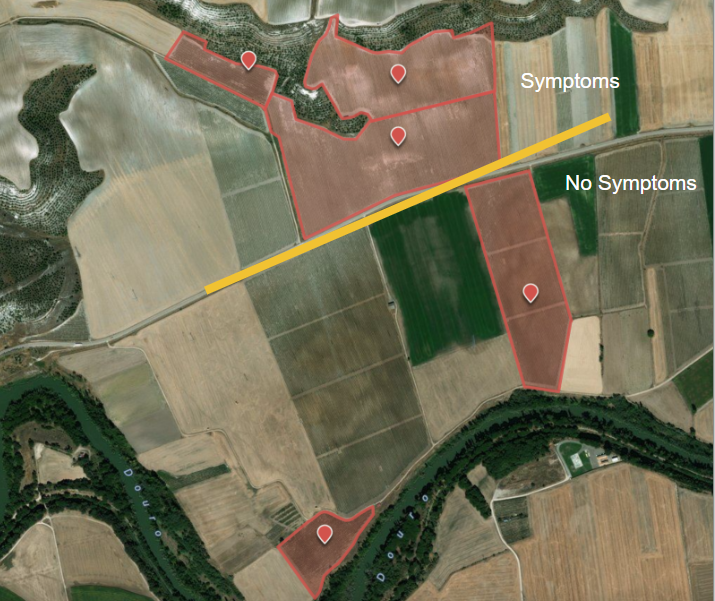
The pathogen alone did not explain the different outcomes.
Black foot disease was detected at comparable levels across the vineyard, yet symptoms were concentrated in the north while the south remained symptom-free.
The two areas differed biologically.
Trichoderma was substantially more abundant in the symptom-free south, adding important context to what pathogen presence alone could reveal.
Plant material analysis showed another difference. In the symptomatic north, the black foot pathogen was highly abundant inside the plants, while the same pattern was not observed in the south.
Pathogen detection is only part of the disease picture.
Knowing that a pathogen is present identifies a potential threat. But pathogen presence alone does not always explain what is happening in the field.
In this vineyard, looking at the broader microbiome revealed an important biological difference between areas experiencing symptoms and areas that remained symptom-free.
Look beyond pathogen presence.
Identify pathogen-related disease risk
Compare biological conditions across the field
Assess microorganisms associated with disease suppression
Better understand what you see aboveground.
Compare symptomatic and symptom-free areas
Identify biological differences around the pathogen
Build a more complete picture of disease risk
See the bigger biological picture behind disease risk.
BeCrop® Technology helps growers and agronomists assess pathogens alongside beneficial microorganisms associated with natural disease suppression, adding biological context to crop protection decisions.